#42: Wrinkly Floor Crane
シワクチャユカヅル (皺床鶴)
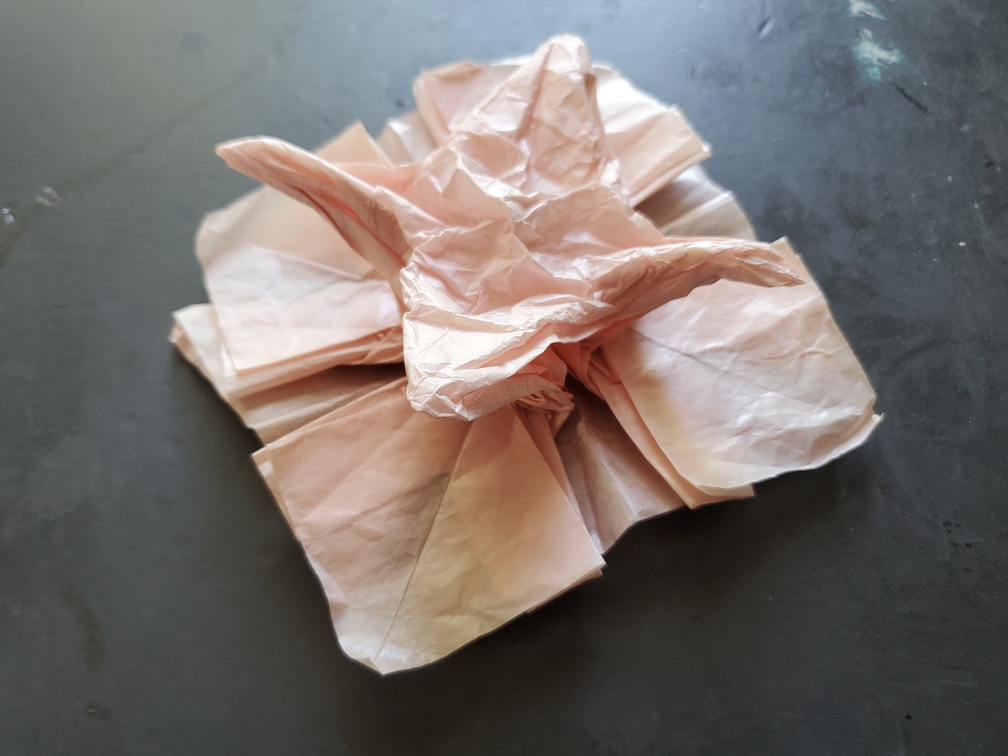
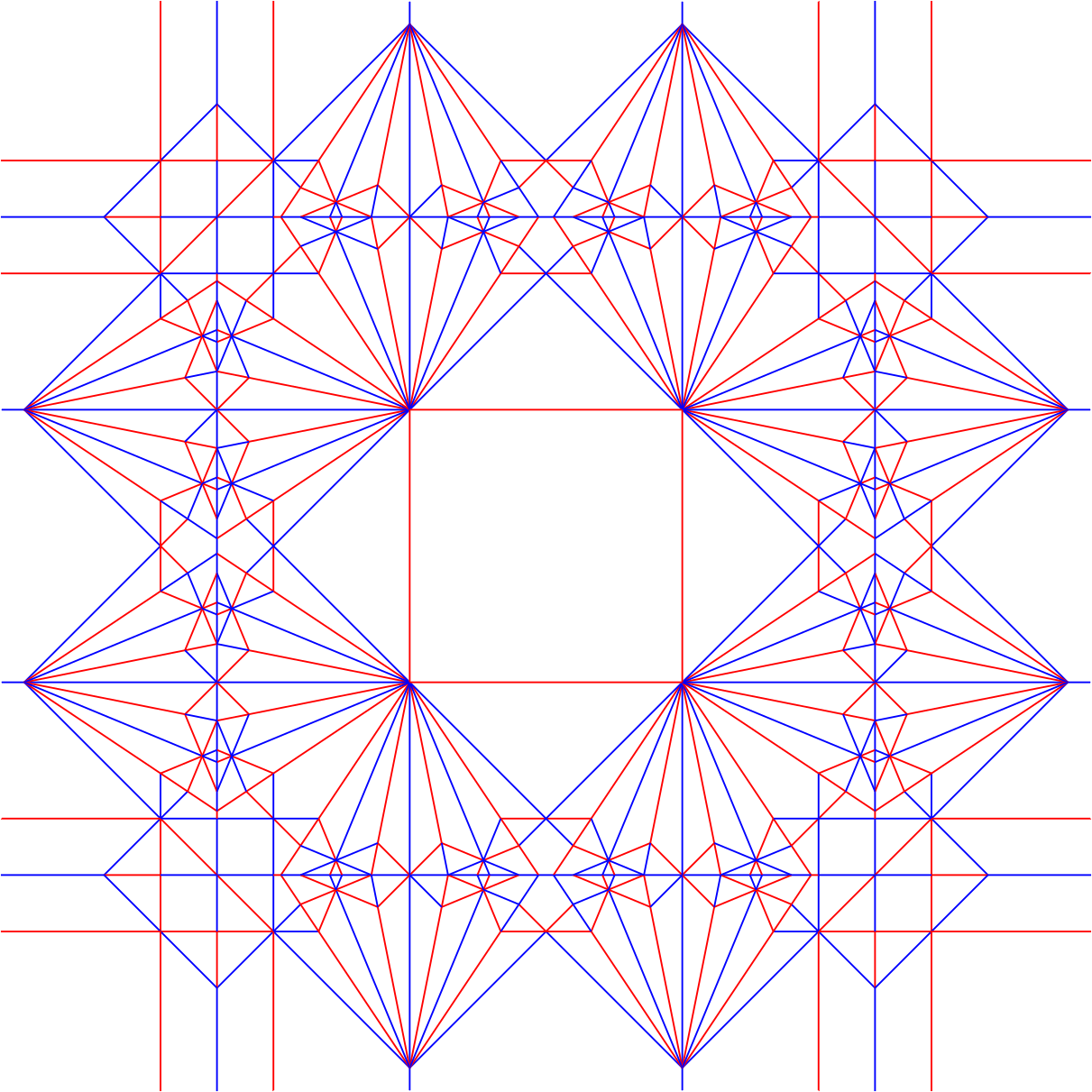
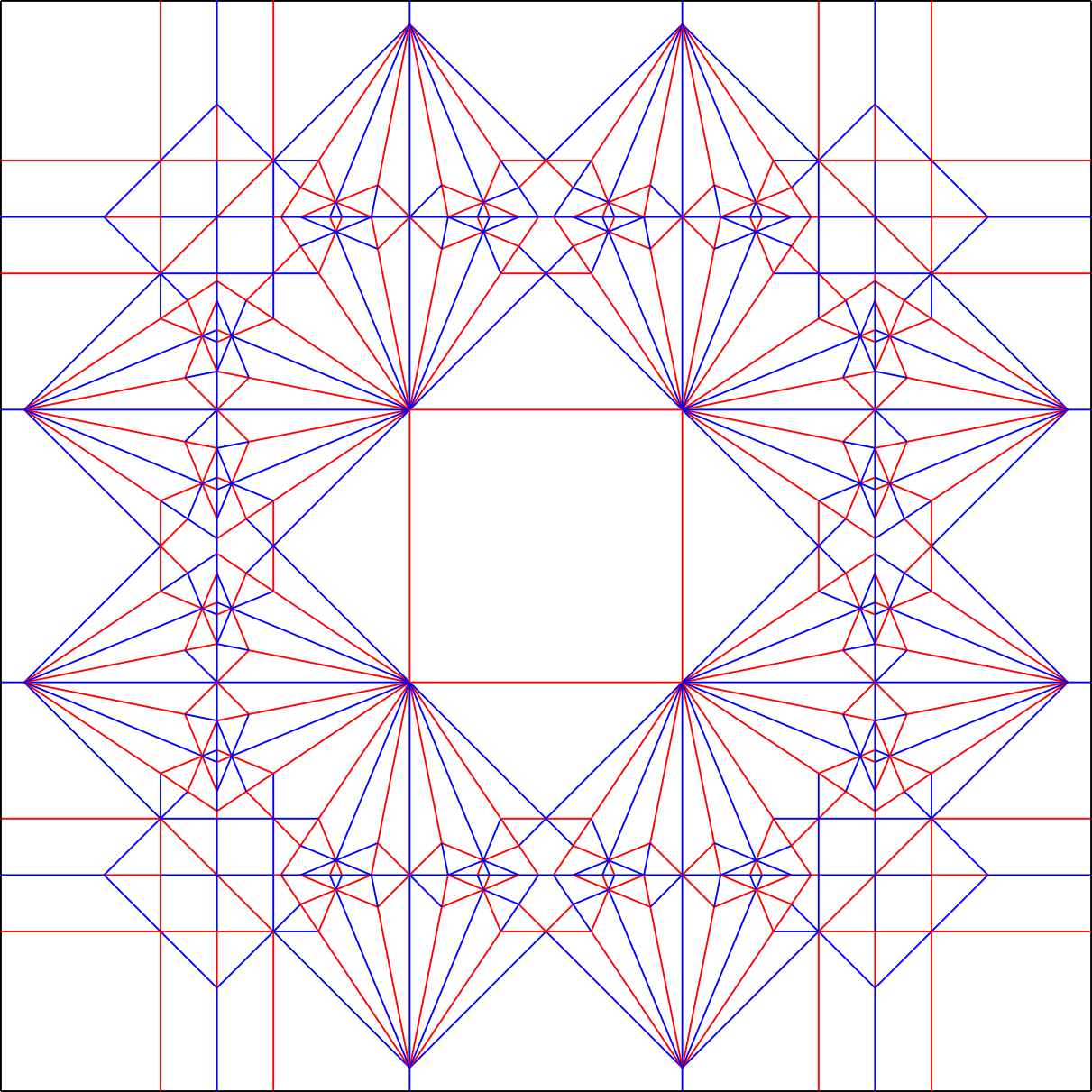
The wrinkly floor crane sits on a floor, looking almost as pitiful as the crumpled crane, but not quite.
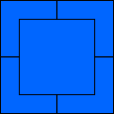
Time to make a tileable crane! My initial plan was to make a square on top of a floor, where the square is just attached to the center. That square can then be folded into a crane. Here’s the initial ERM map:
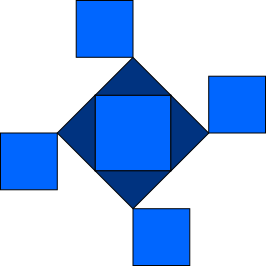
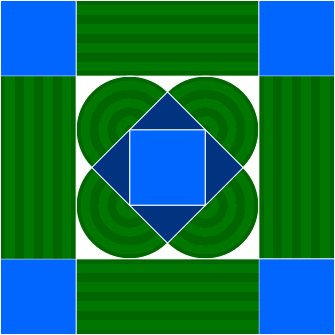
However, when turning this into a crease pattern, I wasn’t as good at transitions back then, so I struggled. There’s a hole filling algorithm, which describes how to actually apply the perimeter theorem1 to a crease pattern and fill it in, but there’s only one (1) implementation of it as far as I know, but it’s not the most convenient to use, especially when you want to try to stick with 22.5° lines. Applying the algorithm manually is annoying, so I just had to go by intuition. I ended up having to space the outer rivers a bit away from the inner rivers to make an intuitive transition.
Then came actually folding it. The sequence I found still had some complicated collapses, so I didn’t manage to collapse it cleanly, and thus, you get a wrinkly crane. Better luck next time.
-
If the boundary of a region can be folded flat, and no distance between two points stretches, then the inside of the region can be folded flat, allowing self-intersection. ↩